



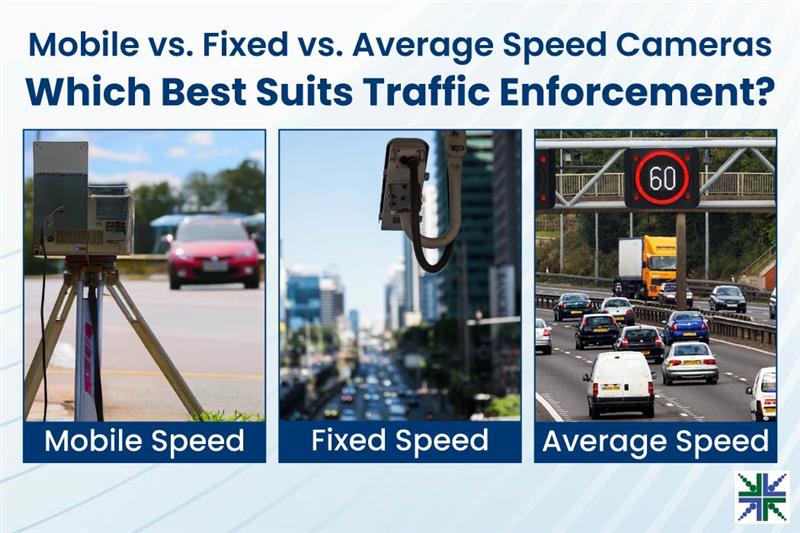
Traffic enforcement strategies have rapidly changed with imaging and sensing advancements. Today, it’s possible to use multiple vision-based systems for controlling speed violations, collecting evidentiary data, and creating safer computing environments. There are three primary cameras that help carry out these enforcement initiatives: mobile speed cameras, fixed speed cameras, and average speed cameras.
Understanding them is critical when selecting the appropriate vision system to meet the demands of modern traffic management frameworks.
In this blog, you’ll learn about how mobile, fixed, and average speed cameras work, their installation requirements, imaging capabilities, and more.
Mobile Speed Cameras
How mobile speed cameras work
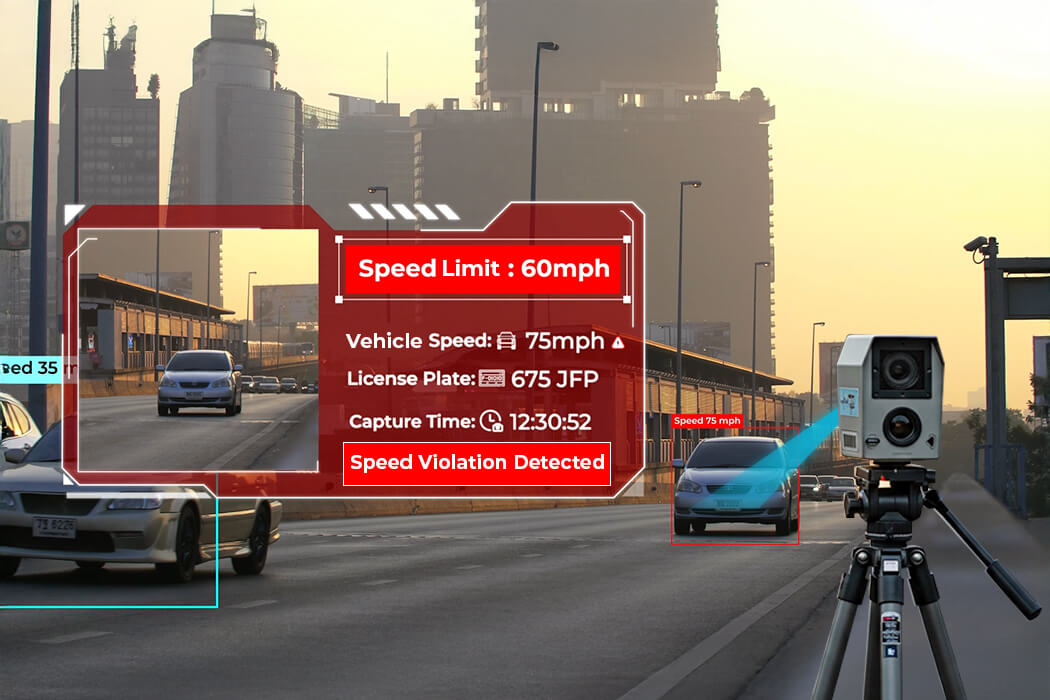
Mobile speed cameras are mounted on vehicles, tripods, or lightweight poles. These cameras use radar, laser, or vision-based speed detection mechanisms to capture and deliver imaging data. They come with global shutter sensors that eliminate motion blur, making them ideal for capturing clear images of fast-moving vehicles.
Furthermore, optical zoom capabilities help focus on license plates or other identifiers across varying distances, while on-board processing units handle real-time speed calculation and violation documentation.
Unlike permanently installed systems, mobile cameras deliver flexible coverage. They enable enforcement authorities to address dynamic safety challenges such as construction zones, accident-prone areas, and special event traffic surges without requiring fixed infrastructure.
Applications of mobile speed cameras
Mobile speed cameras excel in locations where traffic patterns fluctuate frequently. Common scenarios include:
- Temporary work zones
- School vicinity monitoring during peak hours
- High‑risk zones with recurring collisions
- Traffic near stadiums, public events, and processions
Fixed Speed Cameras
How fixed speed cameras work
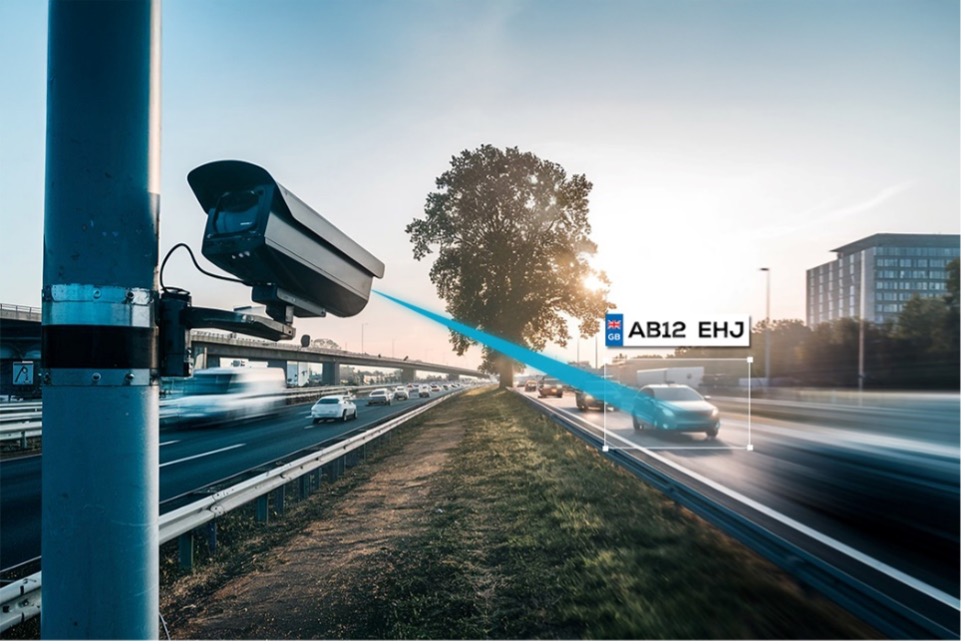
Fixed speed cameras are permanent installations embedded within the traffic infrastructure. They continuously monitor designated road sections, capturing over-speeding events without the need for manual intervention. Detection modules often combine radar, LIDAR, and high-speed imaging to monitor all lanes within the camera’s field of view.
Fixed installations are networked directly to traffic management centers, enabling real-time data transmission and centralized violation processing. They are integrated with Automated Number Plate Recognition (ANPR) algorithms to enhance the identification process, linking violations with registered vehicle databases.
 Applications of fixed speed cameras
Fixed speed cameras are ideal for static enforcement in areas with persistent speeding challenges. Popular environments include:
- Expressway stretches with frequent accidents
- Urban intersections prone to red-light violations
- Tunnel entrances and exits
- Toll plazas
Average Speed Cameras
How average speed cameras work
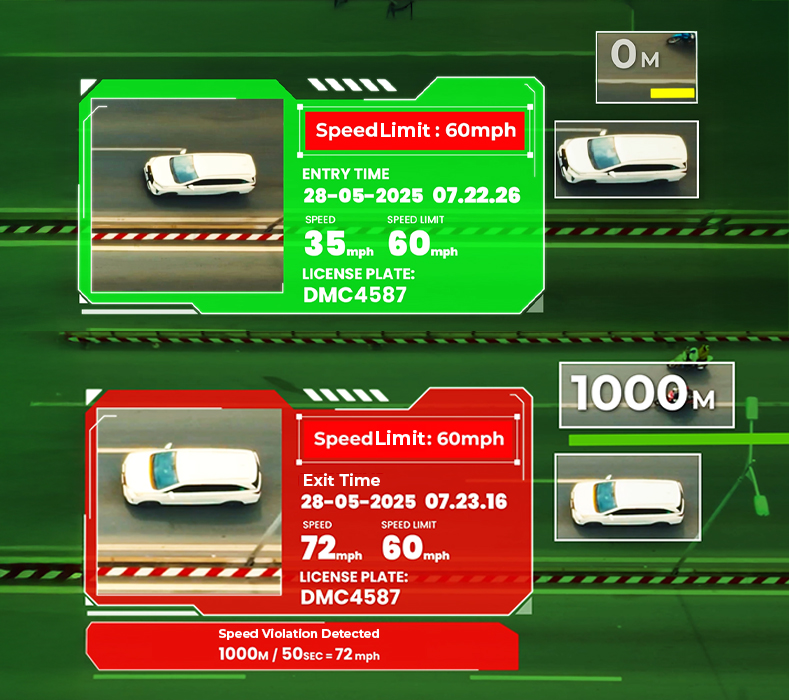
Average speed camera systems calculate a vehicle’s mean velocity over a predetermined stretch of road rather than at a single point. This method involves installing camera pairs at two or more locations along a route. As vehicles pass each checkpoint, cameras capture license plate images along with timestamps. Backend algorithms then compute the average speed based on time-distance calculations.
This encourages drivers to maintain consistent lawful speeds across extended road sections rather than merely slowing down at isolated enforcement points. Average speed systems thus promote smoother traffic flow and uniform compliance with speed regulations.
 Applications of average speed cameras
Average speed systems best serve enforcement needs in areas demanding sustained speed regulation.
Suitable scenarios include:
- Long tunnel passages where sudden braking poses safety risks
- Bridge crossings
- Rural highways
Top Features of Mobile, Fixed, and Average Speed Cameras
Some features like high-resolution imaging, IP67-rated enclosure, low-light performance, edge processing, and onboard ISP can overlap across mobile, fixed, and average speed camera systems. Notably, for night-time operations, these speed camera systems typically include IR illumination to maintain performance in low-light environments.
However, the features listed below focus on the attributes that are unique to each category based on deployment and usage.
For more information, read our blog on Top 7 Imaging Features of Speed Cameras.
Comparative Analysis: Which Vision System Best Suits Traffic Enforcement?
Flexibility
Mobile speed cameras offer clear advantages for situations requiring rapid response and deployment flexibility. Their portability enables authorities to address temporary hazards, special events, or emergent problem areas without committing resources to permanent installation.
Continuous Enforcement
Fixed speed cameras excel in environments where continuous monitoring is necessary to achieve compliance objectives. Their 24/7 operational readiness, with centralized data aggregation, supports strategic safety initiatives and policy enforcement with minimal manual oversight.
Area of Enforcement
Average speed cameras outperform point-based systems when promoting uniform speed adherence across extended zones. They reduce the occurrence of aggressive braking near isolated camera points and encourage steadier driving behaviors. This ends up lowering accident rates on long stretches prone to speeding violations.
e-con Systems’ World-Class Cameras for Traffic Enforcement
e-con Systems has been designing, developing, and manufacturing OEM cameras since 2003. Over the years, we have leveraged our expertise to ensure clients find and implement the right camera for their smart traffic management systems.
Some of our traffic enforcement cameras include:
- 5MP Sony Pregius S IMX568 Global Shutter Camera
- 2 MP Sony® Pregius S™ IMX900 Global Shutter Camera Module
- Sony® Pregius IMX264 Monochrome/Color USB 3.0 Camera
- Full HD AR0234 Global Shutter Camera
Use our Camera Selector to view our complete portfolio.
Looking for the perfect camera module for your traffic enforcement system? Please write to camerasolutions@e-consystems.com.

Dilip Kumar is a computer vision solutions architect having more than 8 years of experience in camera solutions development & edge computing. He has spearheaded research & development of computer vision & AI products for the currently nascent edge AI industry. He has been at the forefront of building multiple vision based products using embedded SoCs for industrial use cases such as Autonomous Mobile Robots, AI based video analytics systems, Drone based inspection & surveillance systems.