



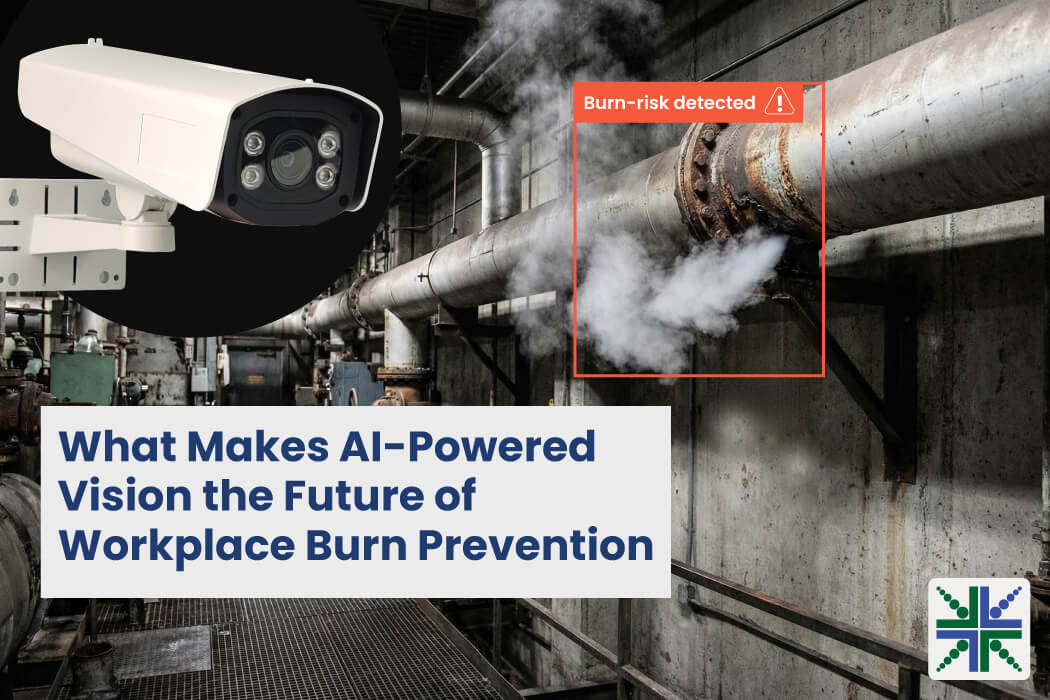
Burn injuries at work can frequently be traced back to routine conditions that are in place longer than they should be. Hot zones remain exposed during changeovers. Chemical handling areas run with small leaks or residue. Temporary wiring and open panels persist during maintenance windows. The risk is in plain sight, yet it rarely triggers action until an incident forces it.
The scale is hard to ignore, especially at the workplace. In high-risk industries, burn risks show up in real injury volume. That’s why it’s no surprise that NIOSH has estimated about 150,000 work-related burns treated in emergency rooms each year in the US alone. Burn Awareness Week 2026, observed between February 1 and 7, is a timely opportunity to review prevention where burn risk is created and how to overcome it with vision solutions.
In this blog, you’ll learn about the challenges of current fire safety systems, which camera features to consider, and how high-risk industries leverage AI vision to reduce burn risks.
4 Reasons Why Current Fire Safety Systems Fall Short
Fire-first design
Most systems target smoke, flame, and high-heat escalation. Burn exposure tends to start earlier through hot-contact points, steam release, splash zones, and energized equipment, where injury can happen even when there is zero fire.
Snapshot inspections
Walkthroughs and checklists capture a moment. Burn-risk conditions change hour to hour during maintenance, cleaning, changeovers, and high-throughput periods, when guards get moved, hoses get rerouted, and temporary setups become “normal.”
Limited exposure visibility
Fire safety tools focus on area conditions and equipment status. Burn prevention also needs visibility into exposure, such as who is entering a hot zone, who is working near a chemical handling point, or who is operating near panels during troubleshooting.
Alarm-to-action gaps
Many alerts are general and centralized. Burn prevention works best when detection points to the exact zone and source, and triggers localized action fast, such as a line stop, audible zone alert, or supervisor notification.
Types of burns that commonly show up:
- Thermal exposure: Hot surfaces, radiant heat, steam, molten materials, and high-temperature processes.
- Chemical exposure: Corrosives, solvents, cleaning agents, reactive mixes, splashes, residue, and mist.
- Electrical exposure: Arc flash risk, energized equipment contact, damaged cables, open panels, and temporary wiring during maintenance.
5 Key Camera Features of Burn Prevention Systems
Thermal imaging
Thermal imaging ensures AI-powered heat anomaly detection by flagging rising temperatures, overheated components, and abnormal hotspots before contact risk escalates. It also helps spot heat leakage around furnace doors, kiln seams, steam lines, and heated conveyors.
High Dynamic Range (HDR)
HDR handles glare from molten material, reflective metal, and bright task lighting, while keeping usable detail in darker zones near pits, corridors, or behind equipment. It drives consistent visibility across mixed-light industrial bays.
High frame rate
High frame rate capture tracks quick movements near burn-risk areas, such as loading actions, handoffs, and forklift traffic near hot processes. Hence, it becomes easy to reduce missed moments that can hide brief exposure.
Low-light performance
Low-light imaging enables monitoring in dim areas such as warehouses, enclosed processing spaces, and night shifts where burn risk persists. It results in reduced dependency for adding extra visible lighting in sensitive work zones.
AI analytics for real-time alerts
On-device AI can trigger localized alerts when unsafe proximity, missing PPE, or unsafe access patterns appear near burn-risk zones. Local processing also reduces bandwidth load when only event clips and metadata need escalation.
10 Use Cases of Camera-Based Burn Prevention Across Industries
- Waste recycling: Cameras near shredder lines and balers watch for heat buildup at bearings, belts, and motors. When a hotspot trend appears, the alert can route to maintenance before jam-clearing starts.
- Cement plants: Kiln corridors and clinker handling zones create constant heat exposure. Thermal imaging helps flag abnormal heating on shells, ducts, and conveyors, so crews go straight to the source.
- Steel manufacturing: Furnace, ladle, and casting bays bring intense radiant heat, plus heavy bay traffic. Camera analytics can flag boundary breaches during pours, transfers, and slag handling.
- Oil and gas: Turnarounds introduce hot-work perimeters, steam-line corridors, and tight pipe-rack routes. Proximity rules on existing CCTV can trigger a local alarm when movement crosses into a hot zone.
- Mining: Repair shops mix welding, cutting, and energized cabinets in low-visibility conditions. Video monitoring helps supervisors catch unsafe access patterns, especially around panels and welding screens.
- Chemical plants: Transfer skids, sampling points, and washdown areas carry splash and residue exposure. Cameras can detect spill events faster, and the alert can guide isolation steps before foot traffic spreads exposure.
- Warehouses: Charging bays and conveyor motor zones create burn pathways that get missed during busy picking windows. Thermal imaging checks on chargers and motors, along with video review of handling practices, reduce the exposure around batteries.
- Die-cutting: Changeovers open guards and bring hands close to heated tooling and energized components. Camera-based zone rules can flag repeated unsafe reaches during setup and rework.
- Food processing: Fryer lines, steam release points, and hot-water sanitation combine heat with wet floors and fast movement. Camera alerts around recurring spill points and hot equipment help reduce contact and splash injuries during production and clean-down.
- Battery production: Formation racks, ovens, and electrolyte handling combine thermal event risk with chemical exposure. Visual feeds can catch early heat rise, while video helps confirm safe approach paths around test stations and racks.
e-con Systems’ Camera Solutions for Burn Prevention Systems
Since 2003, e-con Systems has been designing, developing, and manufacturing OEM cameras. We have a proven track record of giving vision power to many high-risk industries that are prone to workplace injuries. For burn prevention systems, our camera solutions can power fire and smoke detection in heat-prone zones and PPE detection at entry points for hot-work, chemical handling, and electrical maintenance areas. So, any exposure risk gets flagged while conditions are still manageable.
This approach also leads to a smarter cost-benefit scenario due to fewer manual workflows, faster incident response, and more. Our solutions also ensure effective compliance mapping since each detection rule can be linked based on where and how your site operates. They also help provide records that show alerts, response actions, and closure.
Explore e-con Systems’ smart surveillance camera solutions.
You can also visit our Camera Selector Page to check out our end-to-end portfolio.
If you are looking for the perfect camera setup for your burn prevention system, please write to camerasolutions@e-consystems.com.
FAQs
1) Why do current fire safety systems fall short for burn prevention?
They are tuned for smoke, flame, and escalation. Burn exposure can happen earlier through hot-contact points, steam release, chemical splash zones, and energized equipment work that fails to trigger typical fire indicators.
2) What “fail points” show up most in current setups?
Some of the “fail points” are fire-first system focus, snapshot inspections, limited exposure visibility, and alarm-to-action gaps. These gaps show up when conditions change between rounds, and the response depends on the exact zone and hazard source.
3) Which burn types are covered, and why do they matter for detection?
Thermal exposures show up due to hot surfaces, radiant heat, steam, and high-temperature processes. Chemical exposure may be associated with corrosives and reactive handling points. Electrical exposure may be related to arc flash risk, open panels, damaged cables, and energized equipment tasks.
4) Which camera features matter most for burn prevention?
- Thermal imaging for heat anomalies
- HDR for glare and mixed lighting
- High frame rate for short exposure moments
- Low-light performance for night and enclosed zones
- AI-based real-time alerting for fast response at the source area
5) Where does camera-based burn prevention get used in real operations?
High-risk sites use it around hot processes, chemical transfer points, charging bays, and maintenance areas to catch early heat rise patterns, unsafe proximity, spill events, and access into burn-risk zones during high-activity periods.

Ram Prasad is a Camera Solution Architect with over 12 years of experience in embedded product development, technical architecture, and delivering vision-based solution. He has been instrumental in enabling 100+ customers across diverse industries to integrate the right imaging technologies into their products. His expertise spans a wide range of applications, including smart surveillance, precision agriculture, industrial automation, and mobility solutions. Ram’s deep understanding of embedded vision systems has helped companies accelerate innovation and build reliable, future-ready products.