



Key Takeaways
- How on-device AI processing enables privacy-by-design surveillance
- Why features like face blurring and 3D anonymization are critical for legal compliance
- How robust imaging and secure data transfer ensure reliable, court-admissible evidence
- The role of in-camera compliance controls in meeting global standards like GDPR and NDAA
Public surveillance plays a visible role in how cities function day to day. Cameras watch intersections, transit hubs, public buildings, and busy streets to enable safety, enforcement, and incident review. People see them everywhere, which means expectations around responsibility and accountability stay high.
At the same time, privacy rules, data protection laws, and audit requirements keep changing. City authorities and system integrators carry the burden of proving that video capture follows rules from the very first frame. When footage travels through multiple servers and software layers, that burden grows heavier and harder to manage.
In this blog, you’ll see how edge AI cameras reduce compliance risks in public surveillance – and what features enable them to do so.
Overcoming Compliance Risks of Public Surveillance with Edge AI Cameras
Risk: Uncontrolled capture of identifiable visual data
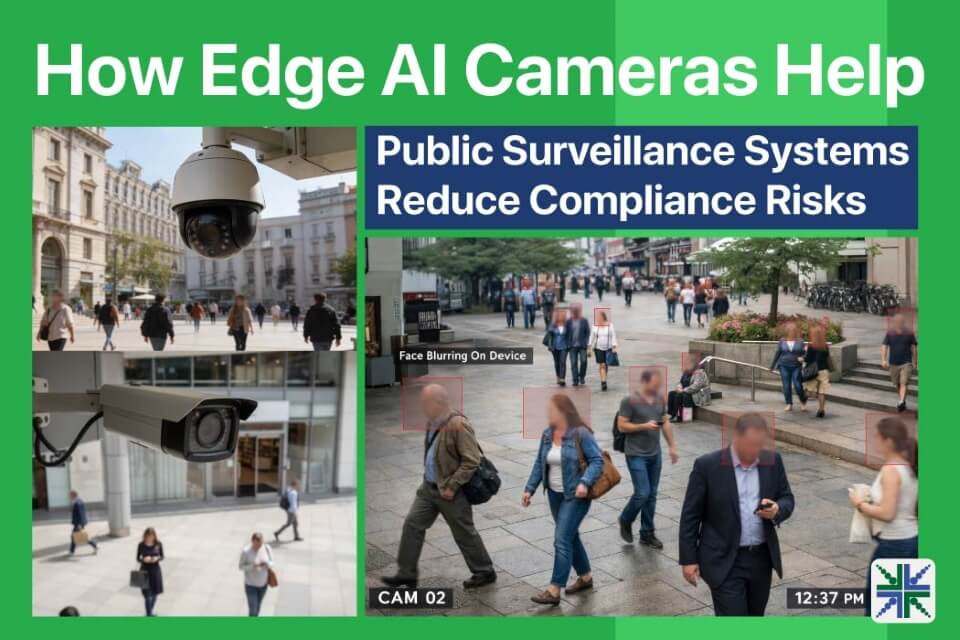
Public surveillance systems routinely record faces, vehicle occupants, and other identifiable details in open environments. It creates compliance pressure tied to consent, proportional monitoring, and limits on personal data collection. When raw video travels to centralized servers, the exposure increases while accountability weakens.
Solution: Face blurring at the point of capture
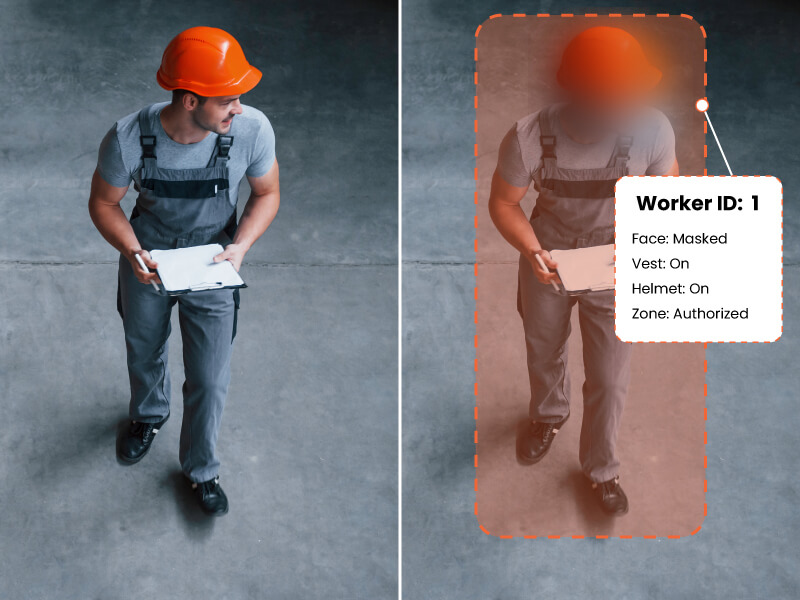
Edge AI cameras address these risks through face blurring performed directly on the device. By masking identities at the moment of capture, the system changes how personal data enters the workflow while still performing enforcement and monitoring tasks required by city authorities.
Risk: Weak traceability and audit gaps in video evidence
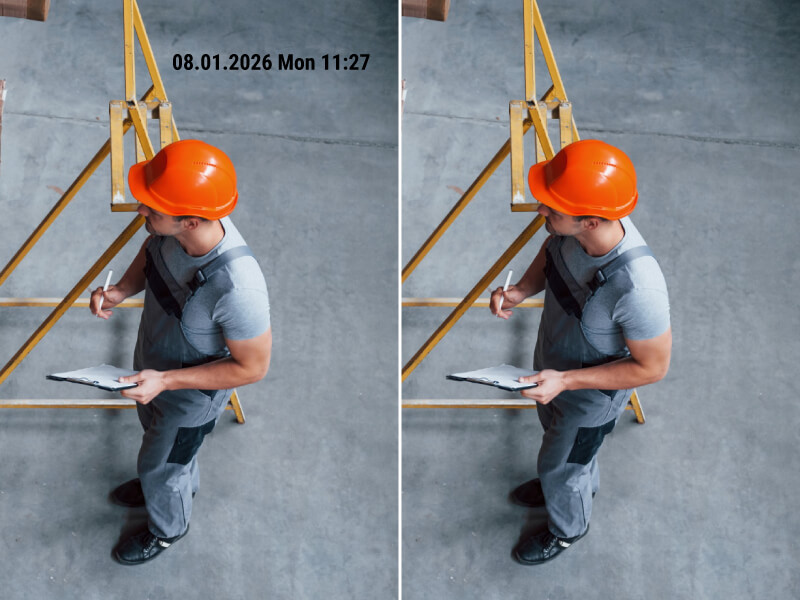
Surveillance footage plays a key role in citations, investigations, and legal review, placing heavy emphasis on timeline accuracy and data integrity. That’s why gaps in timestamp handling, manual synchronization, or missing metadata make it difficult to track day-to-day activities and accurately reconstruct event timelines. It ends up raising audit concerns and weakening the evidentiary value of video footage.
Solution: Privacy-aware timestamp anonymization
Edge AI cameras address audit gaps by maintaining structured, on-device logs that record capture events, processing actions, and system states tied to video evidence. These logs make it easier to track the day-to-day activities of people in a controlled and accountable way, supporting investigations and audits without exposing raw identities.
Risk: Exposure of personal identity through depth and spatial data
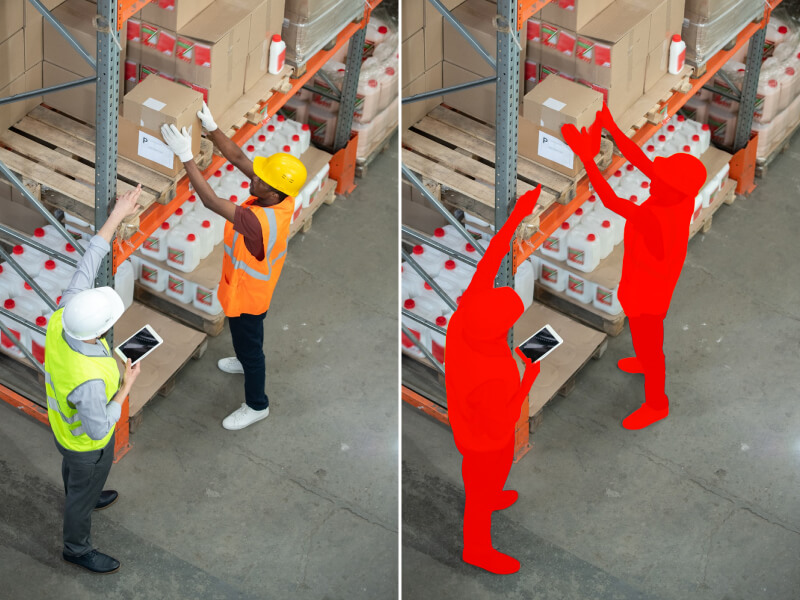
Depth-aware surveillance introduces additional scrutiny when spatial information could reconstruct personal identity or movement patterns. Detailed depth maps increase regulatory pressure if stored or transmitted improperly.
Solution: 3D anonymization for identity-safe spatial analysis
Edge AI cameras help execute 3D anonymization during capture. So, the spatial data gets abstracted into compliant formats that change how identity links form, empowering crowd monitoring, zone enforcement, and safety analysis while maintaining alignment with privacy expectations.
Features of Edge AI Cameras for Public Surveillance Compliance
HDR imaging for consistent evidence capture
Public surveillance scenes involve uneven lighting, glare, shadows, and rapid brightness changes. HDR imaging helps cameras perform reliably by capturing detail in both bright and low-light regions within the same frame. It eliminates missed context that could raise compliance questions tied to incomplete or misleading footage.
Global shutter for motion blur-free imaging
Fast-moving vehicles, pedestrians, and crowds place heavy demands on image capture quality. Global shutter sensors record entire frames at once, preventing distortion caused by rolling capture methods. It improves how moving subjects appear and changes the reliability of recorded evidence. Accurate motion representation drives effective regulatory reviews where visual consistency and frame integrity matter.
GigE interface for secure video transfer
Surveillance systems depend on predictable data transport between cameras and backend systems. A GigE interface provides stable, high-bandwidth video transmission suited for fixed public infrastructure. Such a setup supports structured network design, controlled access points, and better audit visibility. By keeping data flow organized, GigE connectivity reduces compliance friction tied to uncontrolled video movement.
Inbuilt compliance controls at the camera level
Modern surveillance compliance starts at the device itself rather than downstream systems. Inbuilt compliance controls handle matters directly inside the camera, ensuring compliance with global and regional standards such as GDPR, CCPA, ONVIF, NDAA, TAA, and UL CAP. Embedding compliance logic at the camera level also lowers dependency on post-processing fixes that regulators may question.
On-device AI processing for privacy-first analytics
Edge AI cameras perform analytics directly on the device instead of pushing raw video to centralized servers. They limit unnecessary data exposure and change how sensitive images get handled. Privacy functions such as anonymization and rule-based filtering execute before transmission. On-device processing also helps align with regulatory standards by keeping personal data localized and controlled.
Rugged enclosure for deployment in challenging locations
Public surveillance equipment operates in harsh outdoor and semi-outdoor environments. A rugged enclosure protects internal components from heat, vibration, moisture, and physical stress. It makes sure that the camera performs consistently over long deployment cycles. Stable hardware operation reduces compliance risk linked to dropped frames, corrupted footage, or device downtime that could compromise audit readiness.
e-con Systems Offers Compliance-First Surveillance Cameras
Since 2003, e-con Systems has been designing, developing, and manufacturing advanced camera solutions. We offer smart surveillance cameras that deliver high-performance, reliable imaging and on-device intelligence for public monitoring while meeting compliance standards.
Our current portfolio of surveillance cameras includes:
- AI turret cameras
- AI bullet cameras
- AI dome cameras
- PTZ camera series
- GigE cameras
- Cloud-based device management platform
Go to our Camera Selector page to browse our end-to-end portfolio.
Looking to connect with a camera solution expert to help find the perfect camera? Please write to camerasolutions@e-consystems.com.
FAQs
1) How do edge AI cameras support compliance in public surveillance systems?
Edge AI cameras process video and analytics directly on the device, changing how sensitive data enters surveillance workflows. Privacy safeguards such as anonymization execute at capture, reducing exposure tied to centralized processing. Regulatory expectations around data handling and accountability get addressed earlier in the pipeline.
2) Why does face blurring matter for regulatory compliance?
Face blurring reduces exposure of identifiable visual data captured in public spaces. By masking identities at capture, surveillance programs continue enforcement and monitoring while limiting privacy risk. Source-level protection also reduces downstream governance challenges.
3) How does timestamp anonymization support audits and legal review?
Timestamp anonymization protects individual activity timelines while maintaining the sequence accuracy required for evidence review. On-device handling improves traceability and data integrity. Audit teams gain higher confidence when time metadata remains consistent and protected.
4) What role does on-device AI play in privacy-focused surveillance deployments?
On-device AI runs analytics inside the camera rather than sending raw video to backend systems. Personal data stays localized and controlled, while only required outputs move forward. Such processing supports regulatory alignment tied to data minimization.
5) How do camera features influence surveillance compliance outcomes?
Image quality, motion accuracy, and system stability influence how footage performs during review and audits. Features such as HDR, global shutter, and rugged enclosures support reliable evidence capture. Stable visual records reduce compliance exposure linked to incomplete or distorted data.

Ram Prasad is a Camera Solution Architect with over 12 years of experience in embedded product development, technical architecture, and delivering vision-based solution. He has been instrumental in enabling 100+ customers across diverse industries to integrate the right imaging technologies into their products. His expertise spans a wide range of applications, including smart surveillance, precision agriculture, industrial automation, and mobility solutions. Ram’s deep understanding of embedded vision systems has helped companies accelerate innovation and build reliable, future-ready products.